SASKATOON, Saskatchewan — Churches of the Manitoba-Saskatchewan Conference of Seventh-day Adventists are being asked to adopt the Conference’s first comprehensive safeguarding policy. It covers children, youth and vulnerable adults, including seniors. It goes beyond screening to set rules for training, for reporting and responding to abuse, and for a yearly audit.
The Executive Committee, the Conference’s governing board, approved the policy on September 13, 2026. It will be launched in the first quarter of 2027. For now, it covers the Conference’s 41 congregations in Manitoba, Saskatchewan and Nunavut, and it will later be extended to schools. The Conference developed it with Plan to Protect, a Canadian safeguarding organization.
Safeguarding may be a new word for many church members. It means the steps a church takes to keep people safe from abuse and harm.
On October 14, Pastor Francis Douville, Executive Secretary of the Conference, wrote to pastors and church leaders about the policy. His letter explained that this policy will help churches prevent abuse before it happens and respond responsibly when someone raises a concern. Safeguarding is more than a screening check. It covers who may serve, how they are trained and supervised, how they behave, how concerns are reported, and how the church cares for a person who is hurt.
“Safeguarding is a church’s promise to do everything it can to keep people safe, from a child in Sabbath School to a senior who depends on a visit from the church,” said Charles Ed II Aguilar, President of the Manitoba-Saskatchewan Conference. “People trust us with their children, their aging parents and their own faith. That trust is public, and we have to keep earning it.
“Safeguarding means we choose and train carefully the people who serve, we take every concern seriously, we never cover up abuse, and we care for anyone who has been hurt. Pastors, administrators, teachers, elders and volunteers hold real trust and real power. This policy holds all of us to account. No one is exempt, and that includes me.”
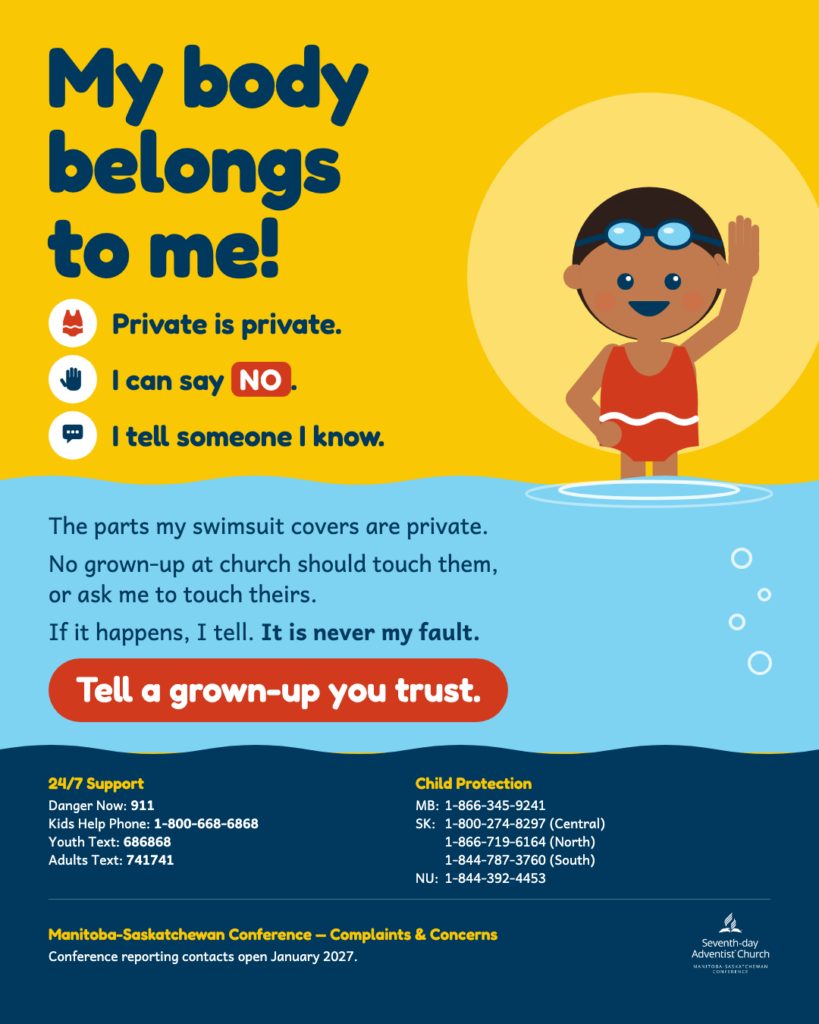
Who it protects and what it names as abuse. In the policy, a vulnerable adult is someone 18 or older who, “because of their age, a disability or other circumstances,” depends on others or is at greater risk of harm. The policy names the elderly among those at risk. Melodie Bissell, chair and senior safeguarding consultant of Plan to Protect, introduced the policy to about 80 church members, pastors, teachers and administrators online on November 8, 2026. “We want to protect children, youth and vulnerable adults, but we also want to protect staff and volunteers from wrongful or false allegations of abuse,” she said.
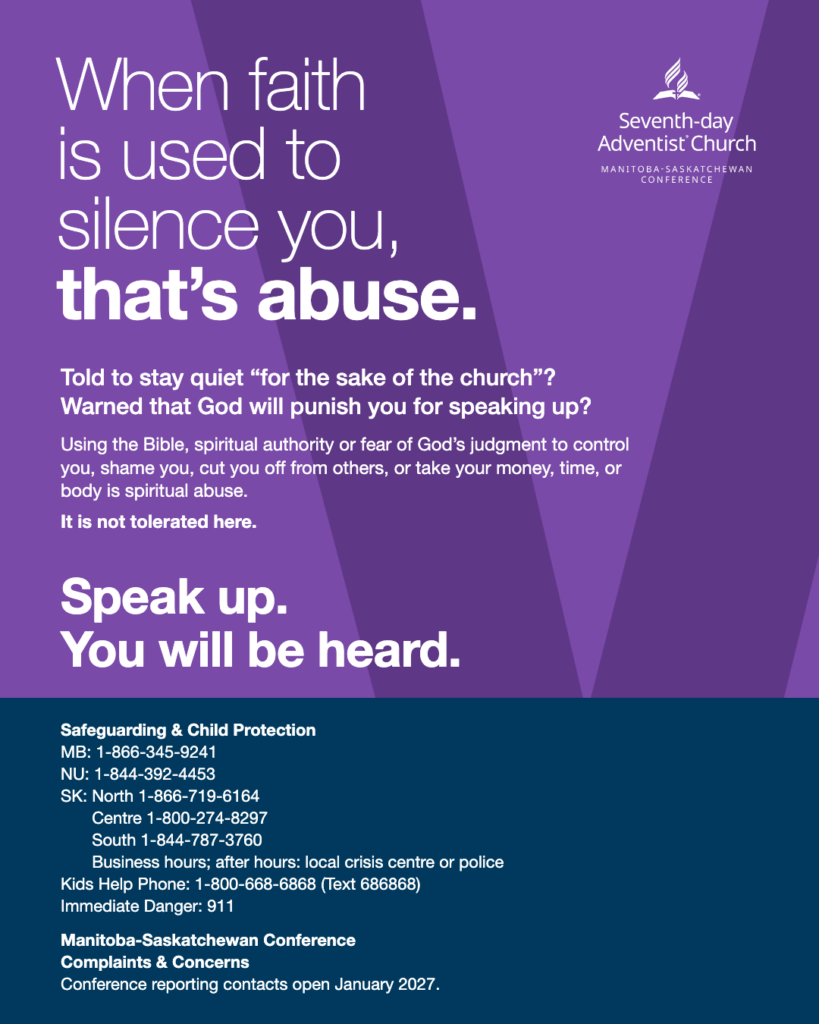
The policy names physical, sexual and emotional abuse, neglect, children’s exposure to domestic violence, harassment and discrimination. For vulnerable adults, it includes financial abuse, such as stealing pension cheques or misusing a power of attorney. It also names spiritual abuse: using Scripture or spiritual authority to control people, frighten them with God’s punishment, shame them, cut them off from family and friends, or use their faith for someone’s gain. Pastoral care of adults must take place in a church office, a public place or a room with the door open. The policy declares “zero tolerance for any form of abuse, neglect, sexual misconduct, harassment, or discrimination.”
What churches must do. The Conference already requires its volunteers to get a criminal record check and a vulnerable sector check through the RCMP, police or other authorities. A vulnerable sector check is a police check for people who work with vulnerable people. The policy now sets one standard for every church. Most newcomers must wait six months before serving children, youth or vulnerable adults, and their criminal record checks are renewed every three years.
Everyone in a position of trust is trained before serving and every year after, including on spiritual abuse, and signs a code of conduct and covenant of care each year. Anyone with reasonable grounds to believe that a child needs protection must report it immediately to child protection or the police.
If the accused is a Conference employee, the Conference’s Relationship Ethics Committee procedure is also followed once the matter has been reported to the authorities. The committee consists of the People Development Director and three church members appointed by the Conference’s administrative committee from a pool of qualified candidates. A Conference employee who is accused is relieved temporarily of all duties until the investigation ends. The confidentiality and dignity of both the victim and the accused are protected. So are whistleblowers. In consultation with the victim, a victim advocate is assigned to support them, and the victim is never asked to sign a non-disclosure agreement about the abuse.
Accountability and what comes next. The policy is to be audited every year and updated every two years. An external audit is planned one year after implementation, in the second quarter of 2028. Douville, Executive Secretary, provides oversight, and Joe Ann Taer, People Development Director, will administer the policy.
The Conference’s pastors and administrators will take a certification course with Plan to Protect in Saskatoon on January 12, 2027.
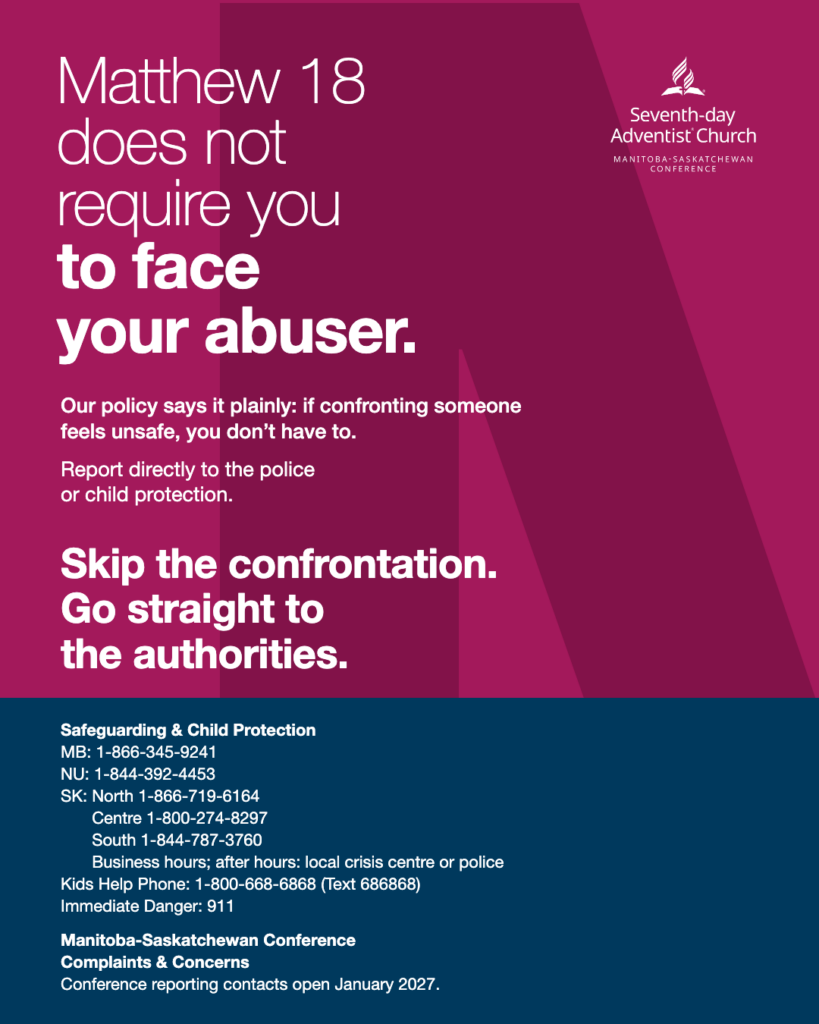
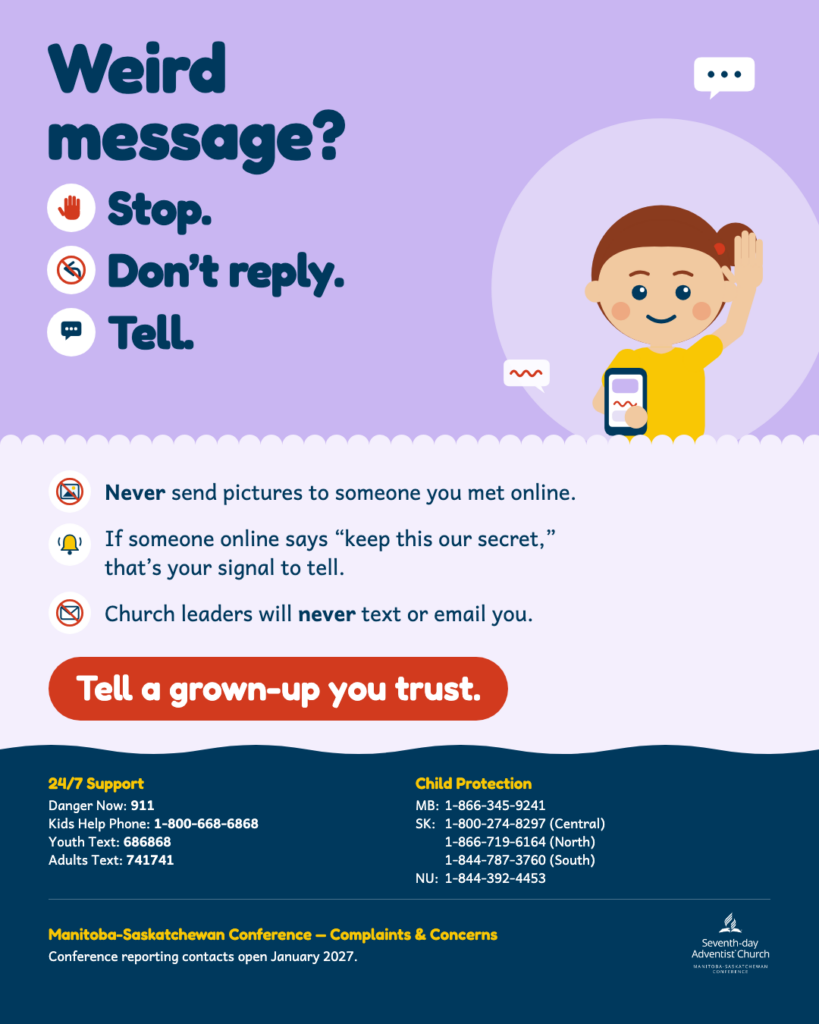
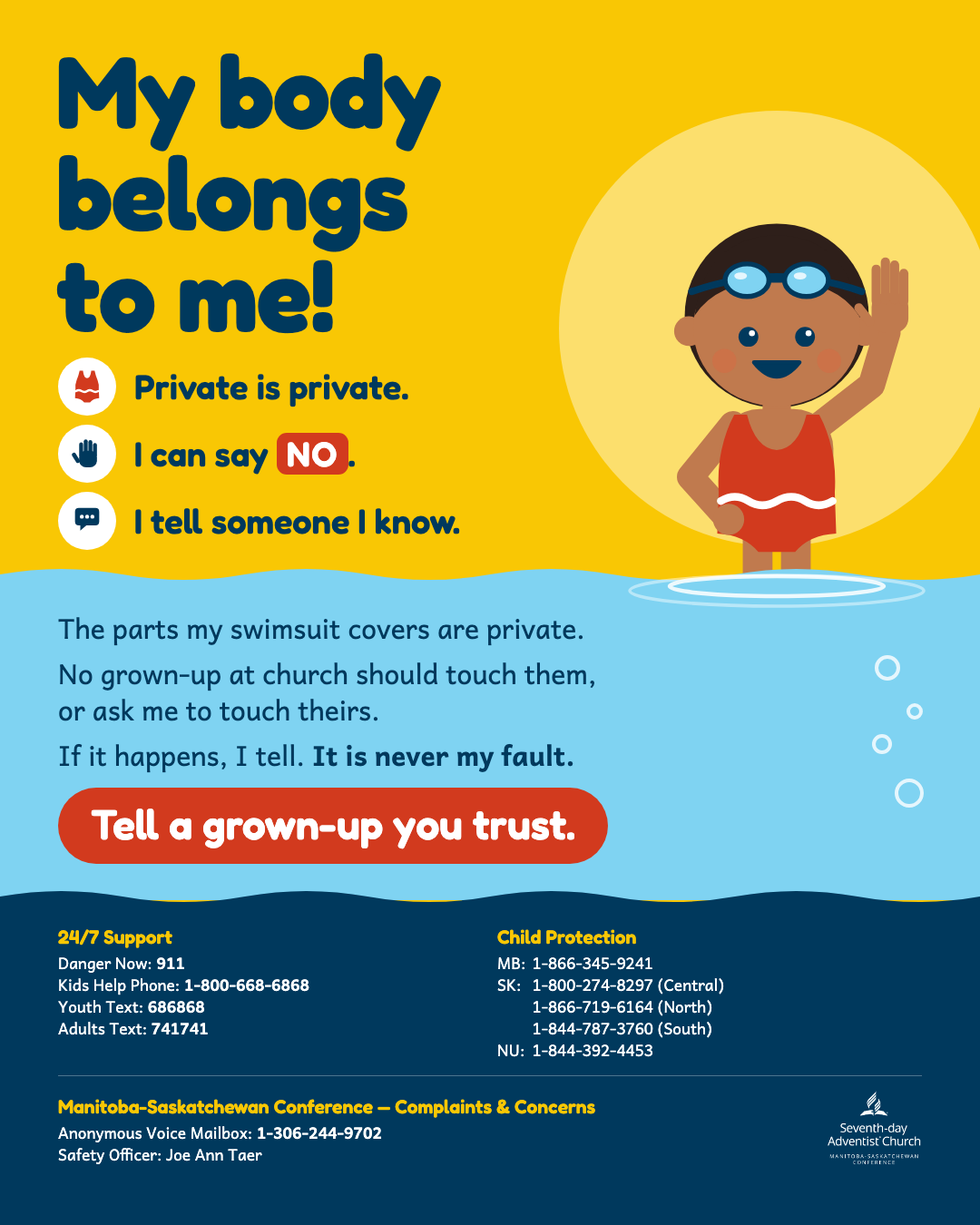
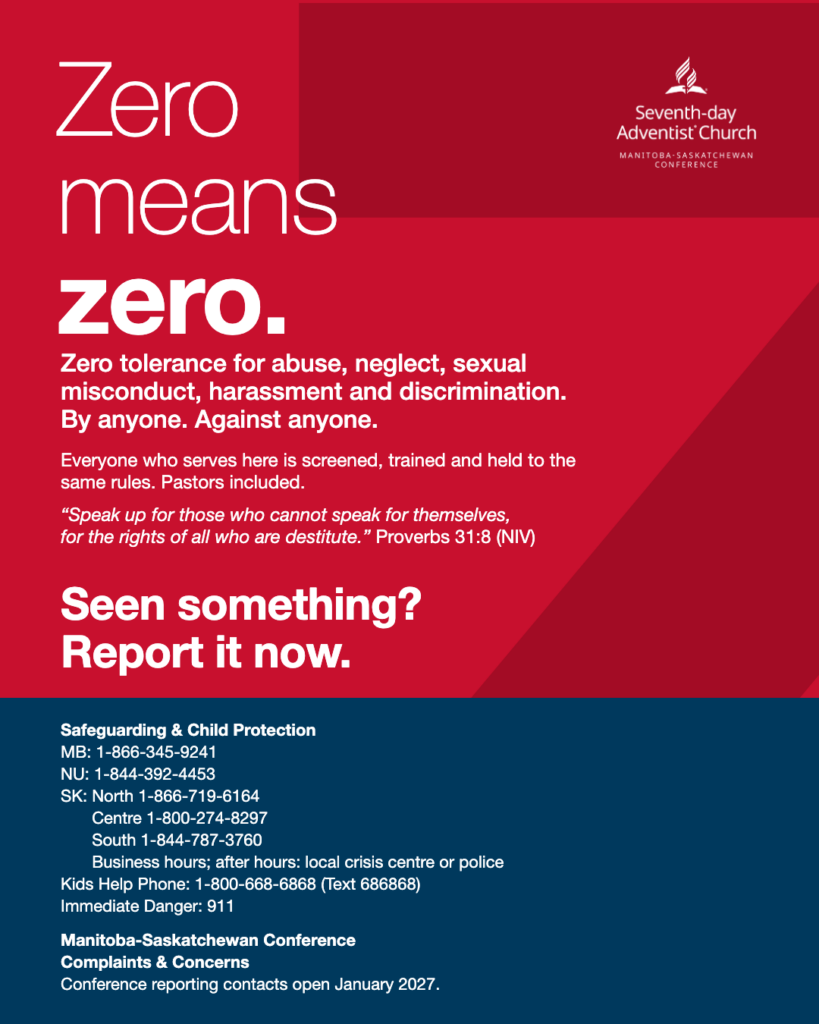
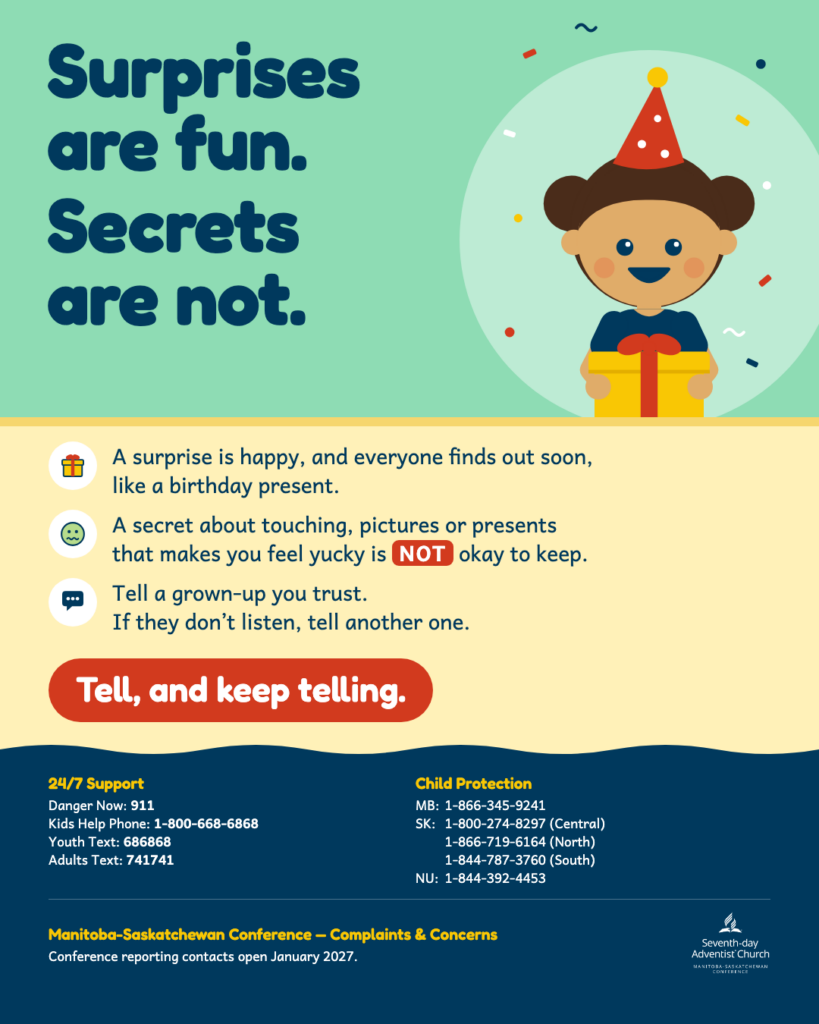
NOTE: Samples of the posters for churches and community service locations will go up in January 2027, when the Conference’s reporting contacts begin operating. The Conference will share more about whistleblowing once its procedures and contacts are in place.
The Conference’s own contacts shown at the bottom of the sample posters are not yet in operation and will open in January 2027.
Until then, use the numbers below.
To report suspected child abuse, call child protection or the police. In Saskatchewan, call the Ministry of Social Services child protection line for your region during business hours (North 1-866-719-6164; Centre 1-800-274-8297; South 1-844-787-3760) or, after hours, your local crisis centre or police. In Manitoba, call Child and Family Services at 1-866-345-9241, or 204-944-4200 in Winnipeg, at any time. In Nunavut, call your local Community Social Services Worker or the RCMP, or the territory-wide line at 1-844-392-4453. In an emergency, call 911.
Media contact: Charles Ed II Aguilar, President, Manitoba-Saskatchewan Conference, 306-244-9700; info@mansaskadventist.ca